Phone number

Email address

Address

Jerzego z Dąbrowy 5d, Człuchów, Poland


Phone number
Email address
Address
Jerzego z Dąbrowy 5d, Człuchów, Poland
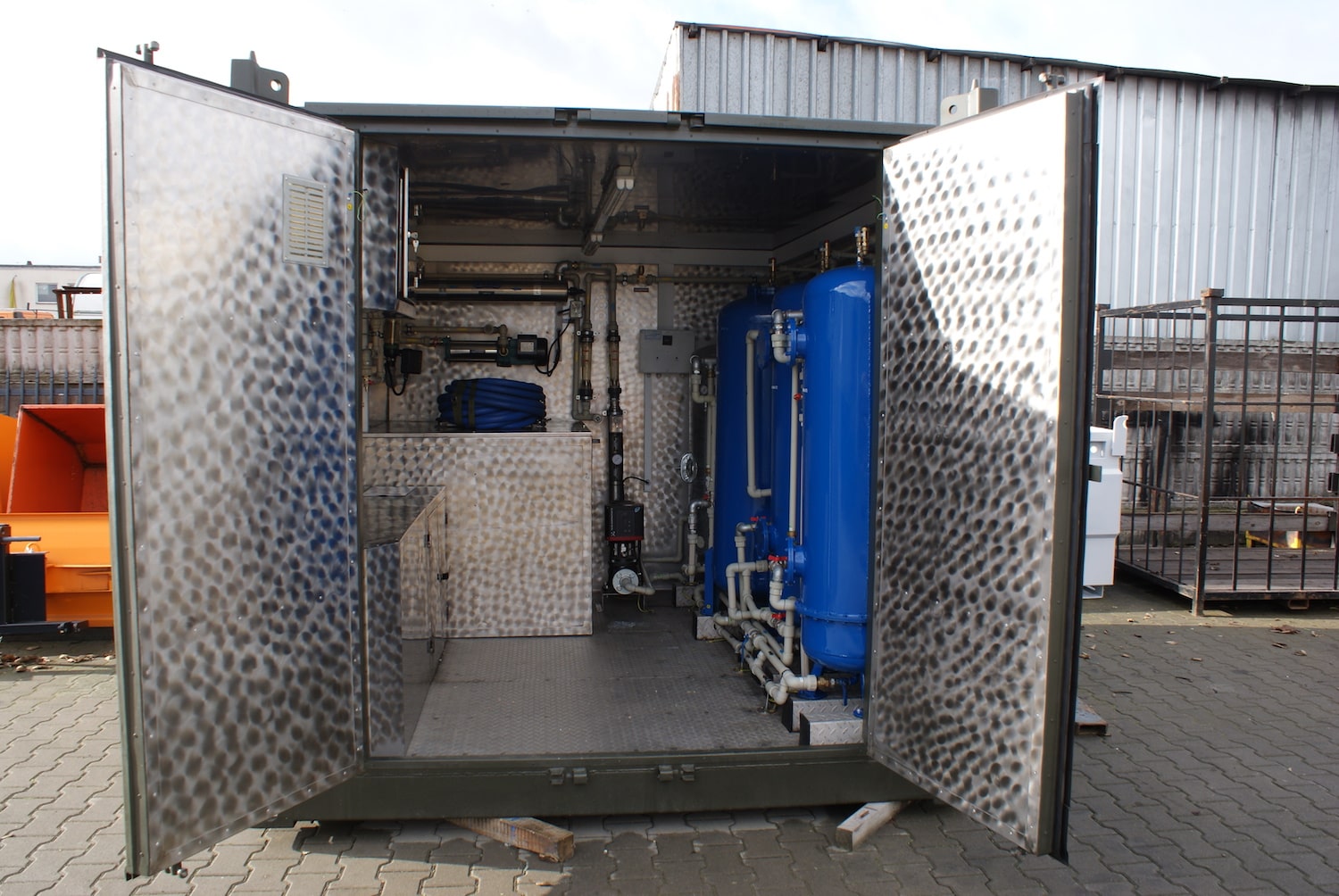
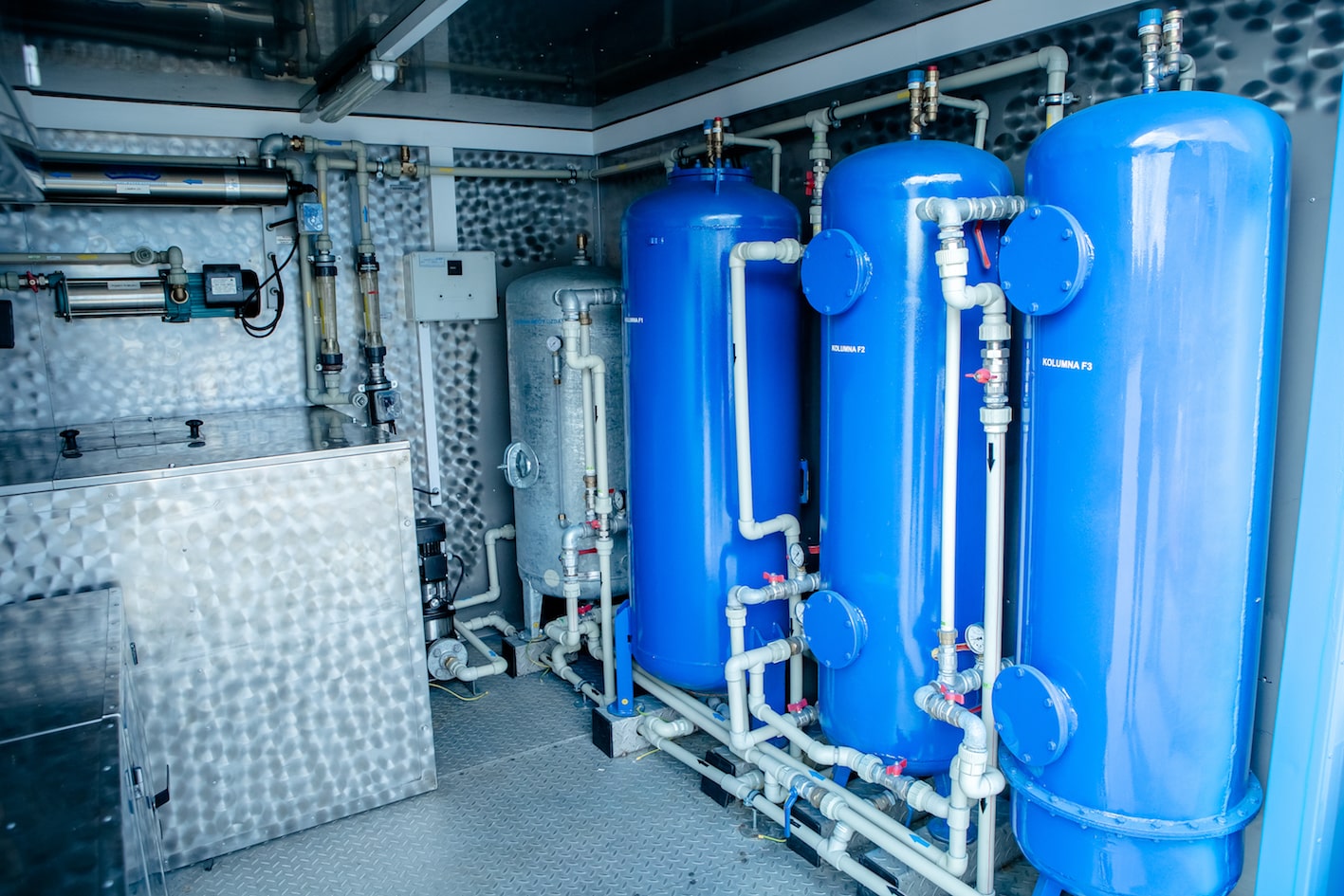
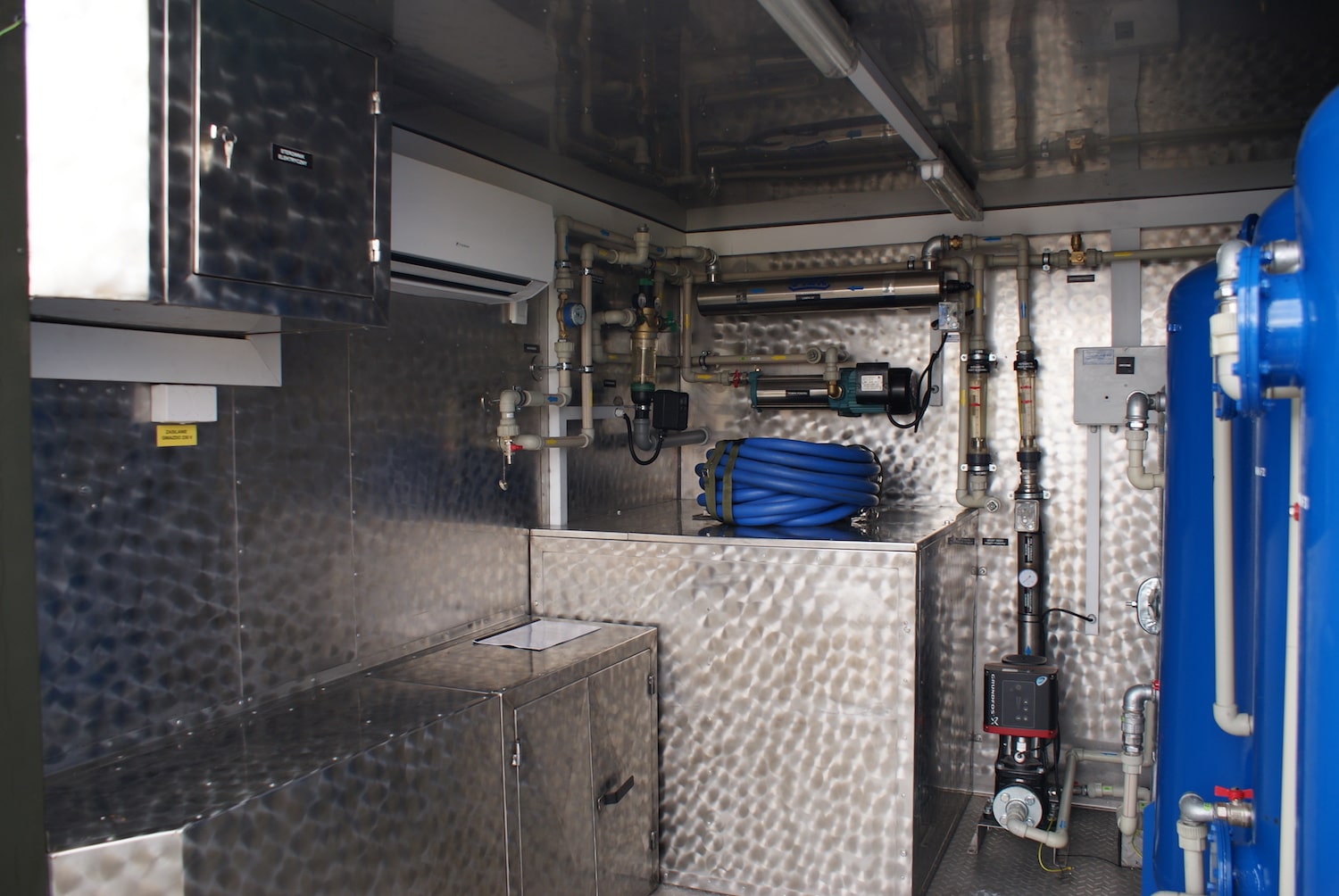
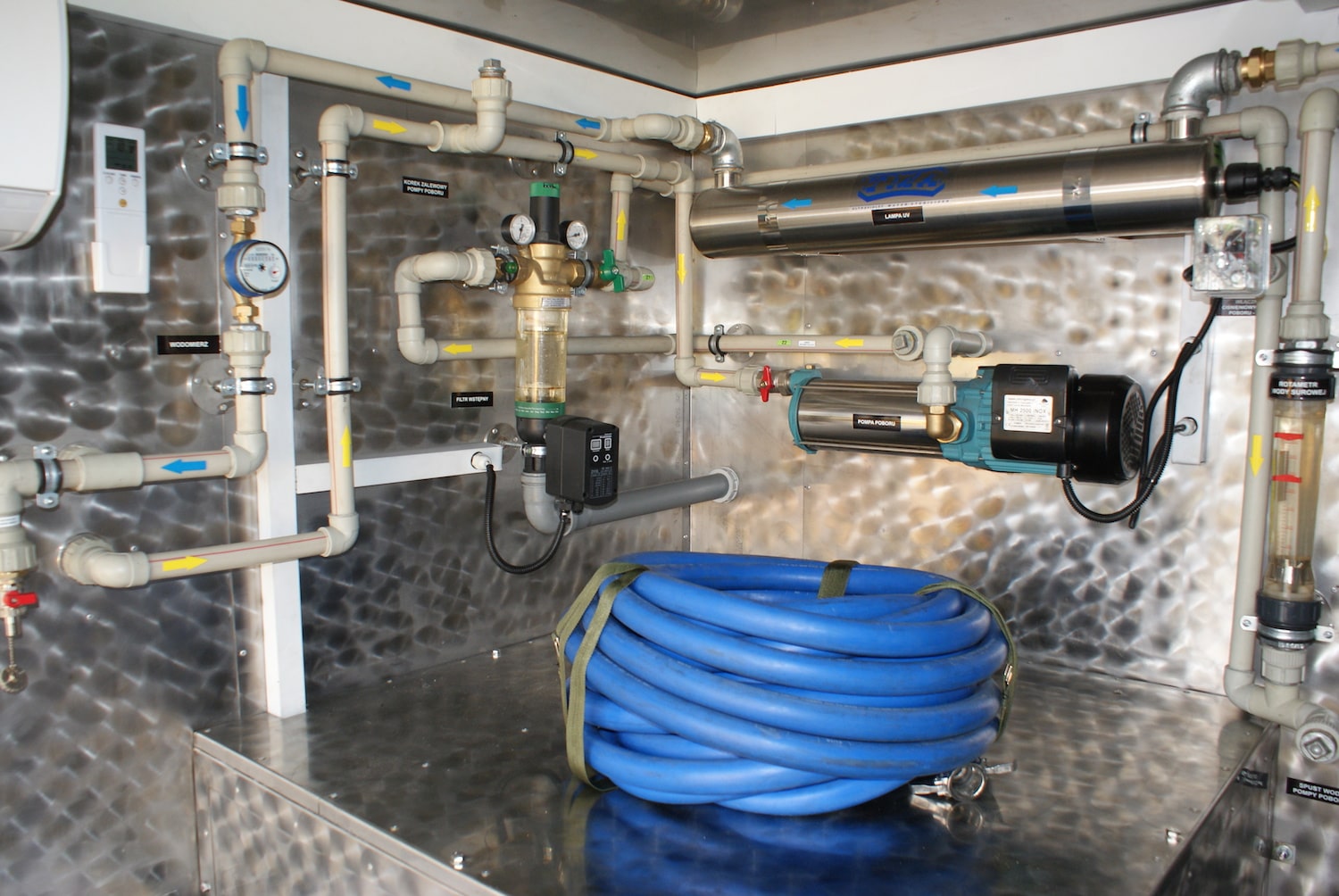
Containerized water treatment stations are used to treat surface and underground water for drinking purposes, removing biological, chemical, and radioactive contamination depending on the configuration. The stations operate using flow-through technology. Water is forced by electric pumps through filtration columns. The size of the container depends on the type of station, and specifically on its capacity. The entire container structure, together with the installed devices, is placed on a common frame, which enables easy transport and the possibility of installation at any selected location.
Thanks to the use of an appropriate heating and ventilation system, the containerized station is completely independent of the prevailing weather conditions. Power is provided by an integrated generator set; optionally, power can be supplied from the main electrical line or external generators via cable inlets located inside the container's switchgear cabinet.
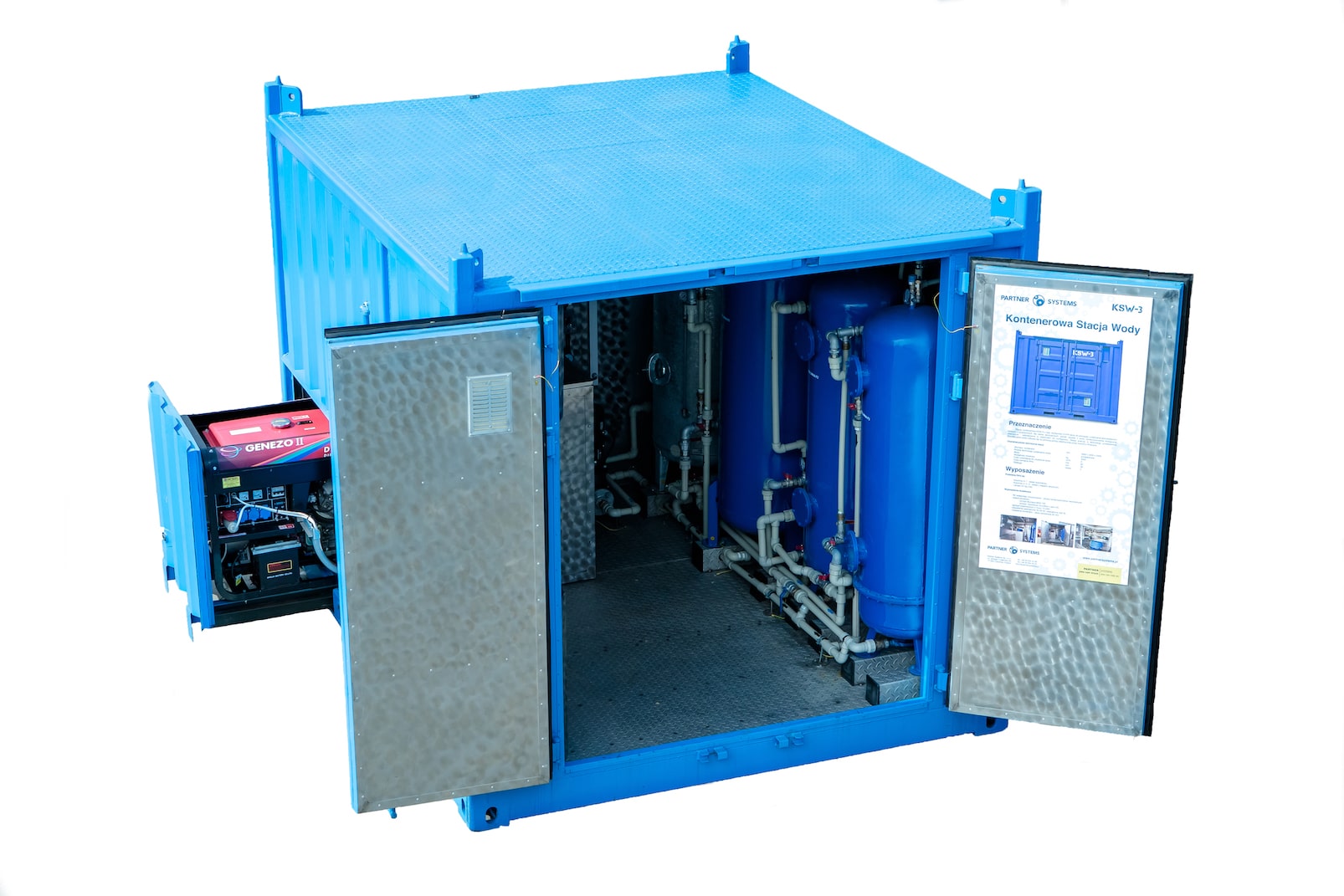
Mobility - capable of being loaded onto a trailer, container vehicle, or a commercial van/passenger vehicle
Simplicity of use - runs smoothly without the requirement of highly qualified personnel
Minimal operational requirements - functions in automatic mode, requiring only occasional supervision by staff
Speed - capability for rapid water purification to meet safe drinking water parameters
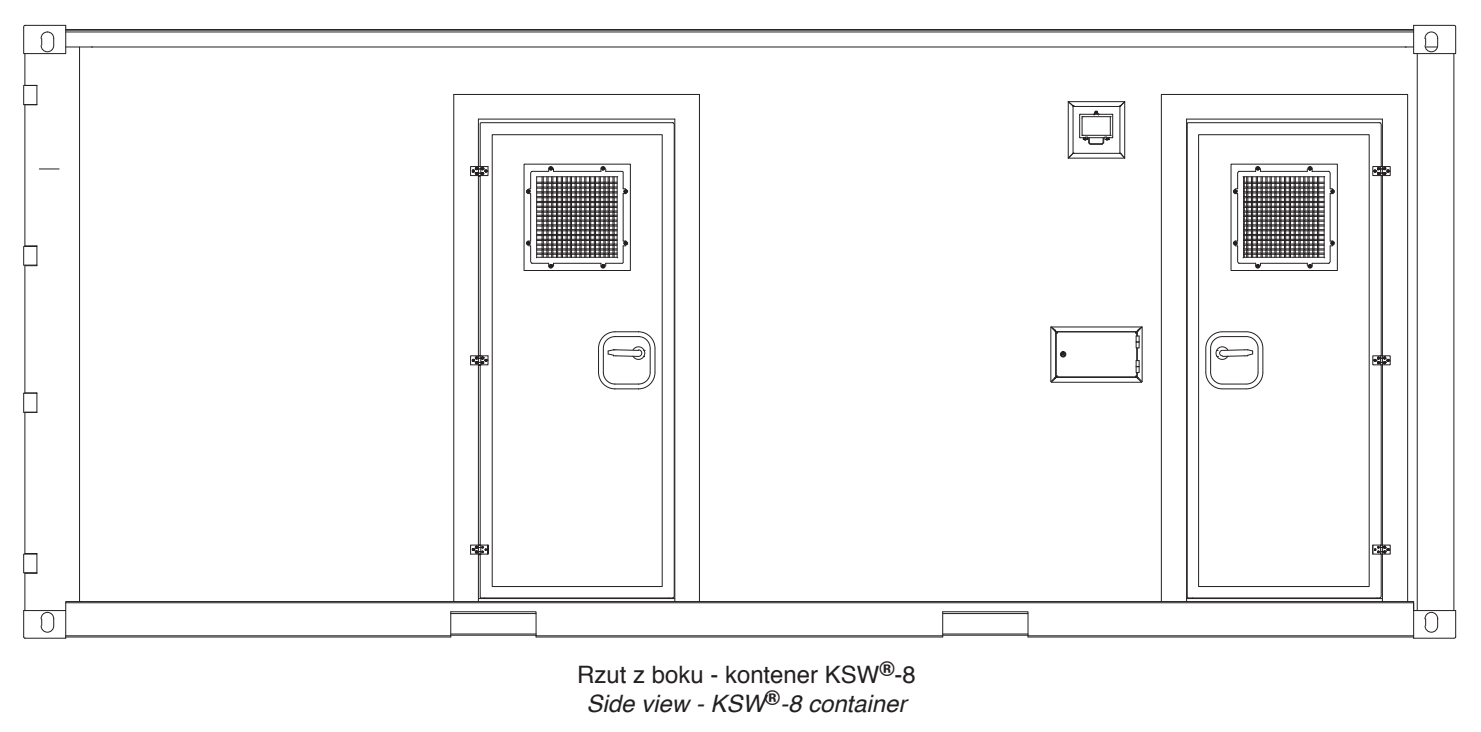
| Type | Capacity [dm3/h] | Dimensions [mm] | Weight [kg] | Filtration stages | Operation [persons] |
|---|---|---|---|---|---|
| KSW-3 | 3000 | 3000 x 2400 x 2450 | 3500 | 5 | 2 |
| KSW-6 | 6000 | 6058 x 2438 x 2438 | 6500 | 5 | 2 |
| KSW-8 | 8000 | 6058 x 2438 x 2438 | 8500 | 4 | 2 |
| KSW-12 | 12000 | 6058 x 2438 x 2438 | 1000 | 4 | 2 |